


Toasted Rye Cottage Loaf
- Hannah G

- Jan 21, 2021
- 3 min read

This has the bouncy, soft texture of a regular white cottage loaf but with the added delicious nuttiness of rye flour. This is a firm favourite with my loved ones and smells absolutely incredible while it bakes. I like to cut this into big wedges and serve with a ploughman's lunch, but it tends to go missing when I am not looking since it makes a delicious quick snack for people to grab between online meetings.

The real secret to this recipe is making sure you properly toast the rye flour before you begin. I tend to go by smell to decide when it is ready, so I know to take it out of the oven when the kitchen is filled with aromas, described by my family as, somewhere between buttered popcorn and roasted hazelnuts. Roasting the flour really helps to enhance the rye and brings out some of the more complex underlying flavours. This means that I can use less of it but still get massive flavour. Having a lower percentage of rye flour in my recipe means that the texture of the bread remains as close as possible to that of a classic white cottage loaf, whilst getting the benefit of all of that yummy toastiness.


In addition to the rye flour flavour bomb, I like to use fresh yeast where possible because there's something really special about it. The smell of fresh yeast always reminds me of my grandmother's kitchen and it gives so much more flavour to the dough than dried yeast.
THINGS YOU WILL NEED
Baking Tray
Greaseproof Paper/ Reusable Baking Sheet
Large Mixing Bowl
Wooden Spoon
INGREDIENTS
150g Wholemeal Rye Flour
400g White Bread Flour
10g Salt
5g Fresh Yeast
355g Water
40g Unsalted Butter
1) Spread the rye flour on a sheet of baking paper or reusable baking sheet. Place the tray in the oven at 180°C/ Gas Mark 4 for 15 minutes, then give the flour a mix and then put it back in the oven for another 10-20 minutes until the flour is a few shades darker and fills the kitchen with toasty, nutty aromas. Leave it to cool.



2) Melt the butter in the microwave and leave to one side to cool slightly. In a bowl, combine the white flour, toasted rye flour and salt. In a separate large mixing bowl, dissolve the yeast in the water. Add the flours to the water and stir a few times to combine loosely. Pour in the butter and continue mixing until the mixture forms a rough ball in the bowl.


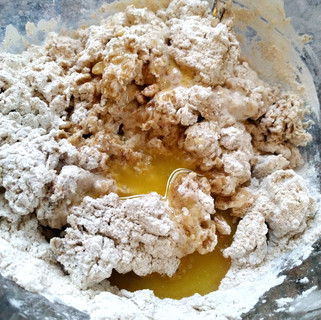


3) Tip this out onto a clean worksurface and knead it for at least 5 minutes until it becomes smooth and elastic.
Make it into a ball and place it back in the mixing bowl. Allow it to rise in a warm room for about 4 hours or until the dough has at least doubled in size.


4) Knock back the dough by lightly kneading - it smells absolutely amazing by this point. Cut off 1/3 of the dough - this will be the top of the cottage loaf. Make the two lumps of dough into tight balls.

If you are struggling to make neat balls, this is how I do it:


Slightly flatten the dough so that the edges are easier to grasp.
Fold a piece of the edge of the dough into the centre of the ball, then repeat this motion all the way around.
Gather the folded in bits together to neaten them up, then twist them together so the edges of the ball are pulled tight.
Poke the twisted nub into the centre of the dough to hold it in place, then flip the ball over so that the seam faces down.
5) Assemble your loaf on a non-stick sheet by placing the smaller ball on top of the larger one. Oil the handle of a wooden spoon and use this to poke a hole straight down the centre of both balls of dough.



6) Finally, make several slashes with a sharp knife approximately 1cm deep around both tiers of the loaf to allow the dough to expand. Leave this to prove in a warm place for 2-3 hours, or until the dough has at least doubled in volume.

7) Preheat the oven to 230°C/ Gas Mark 8. Bake the loaf for 15 minutes, then turn the tray around and continue baking at this temperature for 5 minutes more. The loaf should be lightly browned and smelling good, so lower the temperature to 200°C/ Gas Mark 6 and bake for a further 20 minutes. The bread should now be well baked with a crisp crust. Tap the bottom of the loaf and listen for a hollow sound to indicate that the dough is cooked through. If it instead sounds dull, heavy or wet, leave the bread in the oven for a bit longer.


Comments