


Sour Lemonade Lollipops
- Hannah G

- Dec 15, 2020
- 4 min read
Updated: Dec 29, 2020

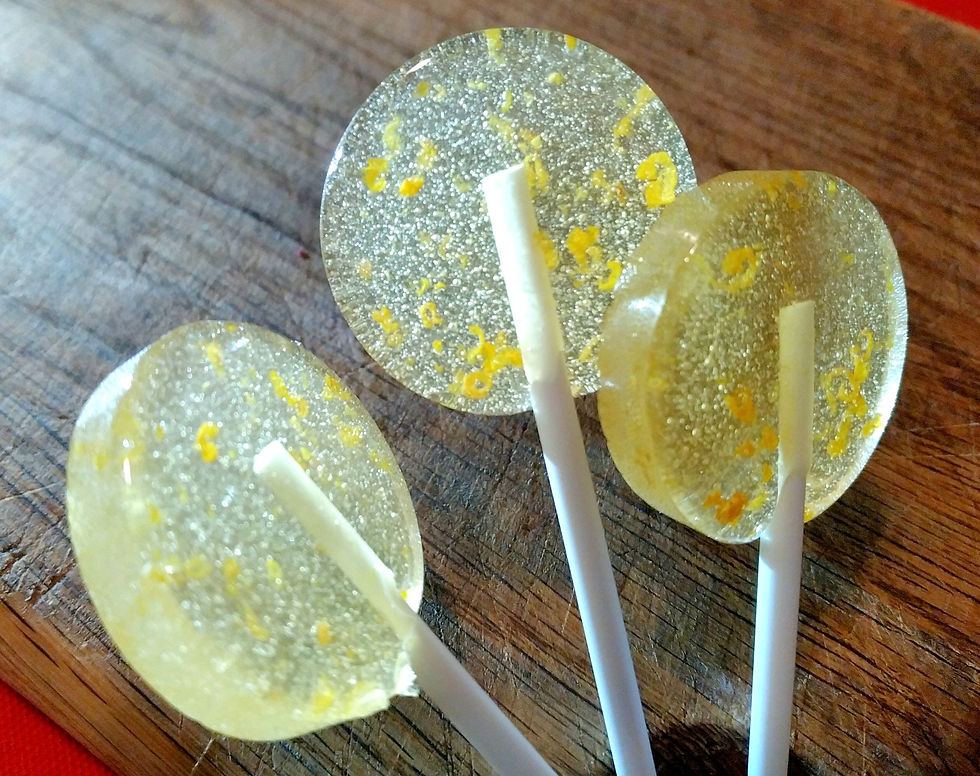
I was determined to make a sweet that tasted like sour homemade lemonade, but I struggled to find recipes using fresh lemons. Most sweets use extracts and flavourings because boiling juice causes it to discolour, losing the pretty crystalline effect you want from a lollipop. Since I did not particularly want to buy a specialist flavouring and wanted to replicate the flavour of fresh lemonade as closely as possible, I decided to engineer a way around the problem. The result is a refreshingly sour, beautifully clear, authentically lemon flavoured lollipop.

The secret really is to make your lemon juice double concentrate and add it only once the isomalt has been heated. This way, you get the flavour of the lemon without having to boil the juice or add too much liquid to the isomalt. I included the finely grated zest of the lemon as well as the juice because in addition to boosting the flavour, I also think it looks really pretty suspended in the lollipop. If you don't like the bitty texture of zest then can leave it out, but your lollipops will be less oomphy.
I used isomalt for this recipe because it sets clear and is significantly less sweet than regular sugar. It needs to be heated to at least 180°C, but don't be daunted by that. I find isomalt much easier to work with than other sugars because it melts well, does not crystallise and gets up to temperature a lot quicker than you might think. It is surprisingly low maintenance as long as you give it a fair amount of your attention for a while.


This makes enough for around 20 lollipops, but since I only have one lollipop mould I set the remaining isomalt into my silicone gummy bear mould.
As long as your mould is resistant to high temperatures, you can set this into any shape as long as it is small because these are far to hard and sour for anything larger than a pineapple cube. If you want to re-use the same mould in batches, you can re-melt your isomalt mixture at around 120°. Avoid going higher than that when re-heating or it will start to change colour and impair the flavour.
As with all sugar work, it is really important to make sure that you work in a safe, obstacle free environment with no distractions such as family members or pets wandering around. The temperatures we are working with are no joke and injuries can happen if you are not careful.
THINGS YOU WILL NEED
Sugar thermometer
Saucepan
Silicone Lollipop mould
Lollipop sticks (not plastic)
Airtight container or mini bags and ties for individually wrapping
Cornflour
INGREDIENTS
Zest of 1 Lemon
60ml Freshly Squeezed Lemon Juice
1/4 tsp Citric Acid
1/2 tsp Tartaric Acid
(If you do not have Tartaric Acid then just increase the amount of Citric Acid to 1/2 tsp)
350g Isomalt
2 tbsp Water
1) Clear a work surface so that you have no obstacles to work around. Place a heatproof mat or chopping board down so you have somewhere to rest your isomalt saucepan when needed and prepare your silicone moulds with the lollipop sticks.
2) In a small saucepan, bring your lemon juice and additional acids to a low simmer and reduce the quantity by at least two thirds, but preferably so there is no more than 15ml liquid remaining. This should not take more than a few minutes but do not let it vigorously boil. It will darken slightly in colour but should be no darker than a rich honey tone. Leave this in a ramekin to one side for now.
3) In a larger saucepan, gently heat the isomalt and water, tilting it on occasion to help it melt. It will be around 120°C by this point. Increase the heat on the hob and keep heating the isomalt until it gets to 180°C. Your isomalt will bubble up quite dramatically but as it cooks you should see it change colour from white to clear.





4) Take it off the heat and let it cool slightly so the bubbles die down. Really carefully add the reduced lemon juice - IT WILL HISS AND SPIT so stand back. Swirl the isomalt to combine the flavour with it and then add the zest.


5) Carefully pour the isomalt into the moulds in a thin, controlled stream. Try to avoid dripping between the lollipops because they will be very hard to neaten up after. Leave the lollipops somewhere they can cool without being disturbed, because once a skin forms on the isomalt you will notice every knock and nudge.
6) When completely cool, they will be solid and come out of the moulds cleanly.

If storing in a airtight container, sprinkle both it and the lollipops with a small amount of cornflour. If packaging individually for gifting, rub the thinnest layer or cornflour imaginable onto the lollipop before placing in a small bag and tying securely - you really do need to keep this layer thin, otherwise you will not be able to see the lovely glass effect of the lollipop, but it will be enough to stop it from sticking to the wrapping. These will keep for ages as long as they are airtight.


Comments